Neurobit / Oct - Jan 2024
Redefining sleep tracking experience

Introduction
What is Sleepfit
Sleepfit is an application designed to assist users in evaluating their sleep patterns through a comprehensive sleep test. Users can leverage the features of Sleepfit to gain a deeper understanding of their overall well-being and optimal sleep management.
What is a sleep test
A sleep test involves the systematic recording of various physiological biomarkers throughout a night using Sleepfit's device. Subsequently, the readings of these biomarkers are compiled into a comprehensive sleep report, which is subsequently shared with the users.
What is a biomarker?
A biomarker is a biological and physiological indicator of the body. Each biomarker measures and denotes different bodily functions. A few examples of biomarkers would be heart rate variability, REM sleep time, and respiratory obstructions.
How does Sleepfit work?
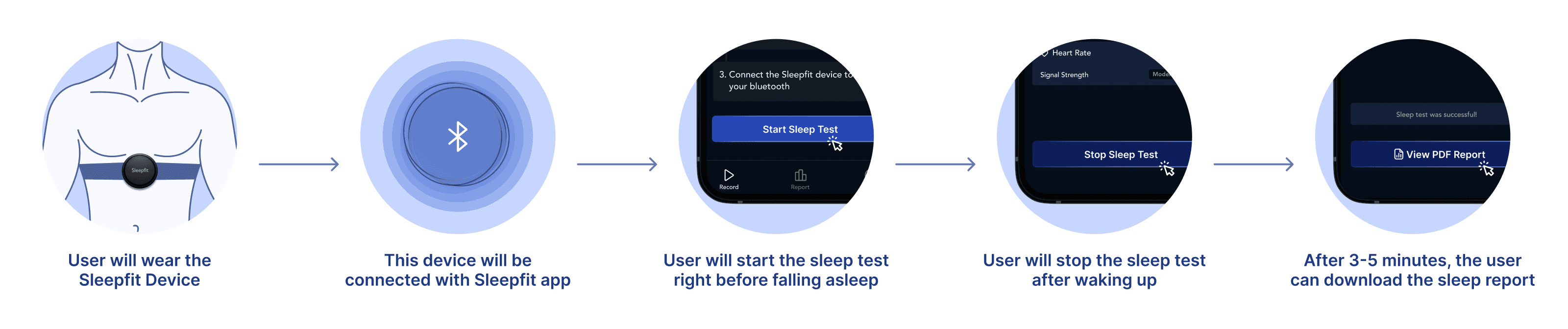
A user will wear the Sleepfit device, and connect it to Sleepfit app. Once the connection is successful, the user will start the sleep test and fall asleep. Upon waking up the user will end the test and remove the device. Within 3-5 minutes the user will get the sleep report on the app.
Product objective
In the initial iteration of Sleepfit, users received their sleep reports in PDF format. With the user base growing, our aim for the subsequent version of Sleepfit was to implement an in-app sleep report feature.
Challenges
Organisation
The PDF report is structured as a sequential compilation of biomarkers, encompassing 16 sleep biomarkers, 4 cardiac biomarkers, and 6 respiratory biomarkers.
Each biomarker is allocated approximately 1-2 pages, resulting in a total length of 37-40 pages for the PDF document.
The challenge here is to arrange these biomarkers in a simple and comprehensive UI. The challenge lies in structuring these biomarkers to ensure seamless and convenient access. This would require a systematic classification that not only accommodates the diversity of biomarkers but also ensures an intuitive and efficient user experience when accessing and navigating through them.
Representation
Each biomarker has the following set of information:
Biomarker name
Biomarker definition (7-8 lines)
Single-night test value
Multi-night test value
Interpretation
Recommendation
With 27 distinct biomarkers, each possessing the attributes mentioned above, the representation of recorded values varies depending on the nature of the biomarker.
The challenge at hand is to conceptualise a solution capable of effectively handling the diverse range of values associated with each biomarker type. Another challenge is to translate static PDF reports into an interactive app flow.
Research
I conducted internal research in collaboration with the backend team to gain a comprehensive understanding of the JSON files associated with each sleep report. The goal of the research was to understand the constituents of the JSON files inside-out.
Part 1: Organisation
Ideation
The guiding principle was to cluster biomarkers with inherent relationships. For instance, we grouped together biomarkers associated with sleep stages and positions. Similarly, biomarkers with negative connotations, such as sleep awakenings and sleep fragmentation, were also clustered.
PDF Sleep Report Architecture (Before)
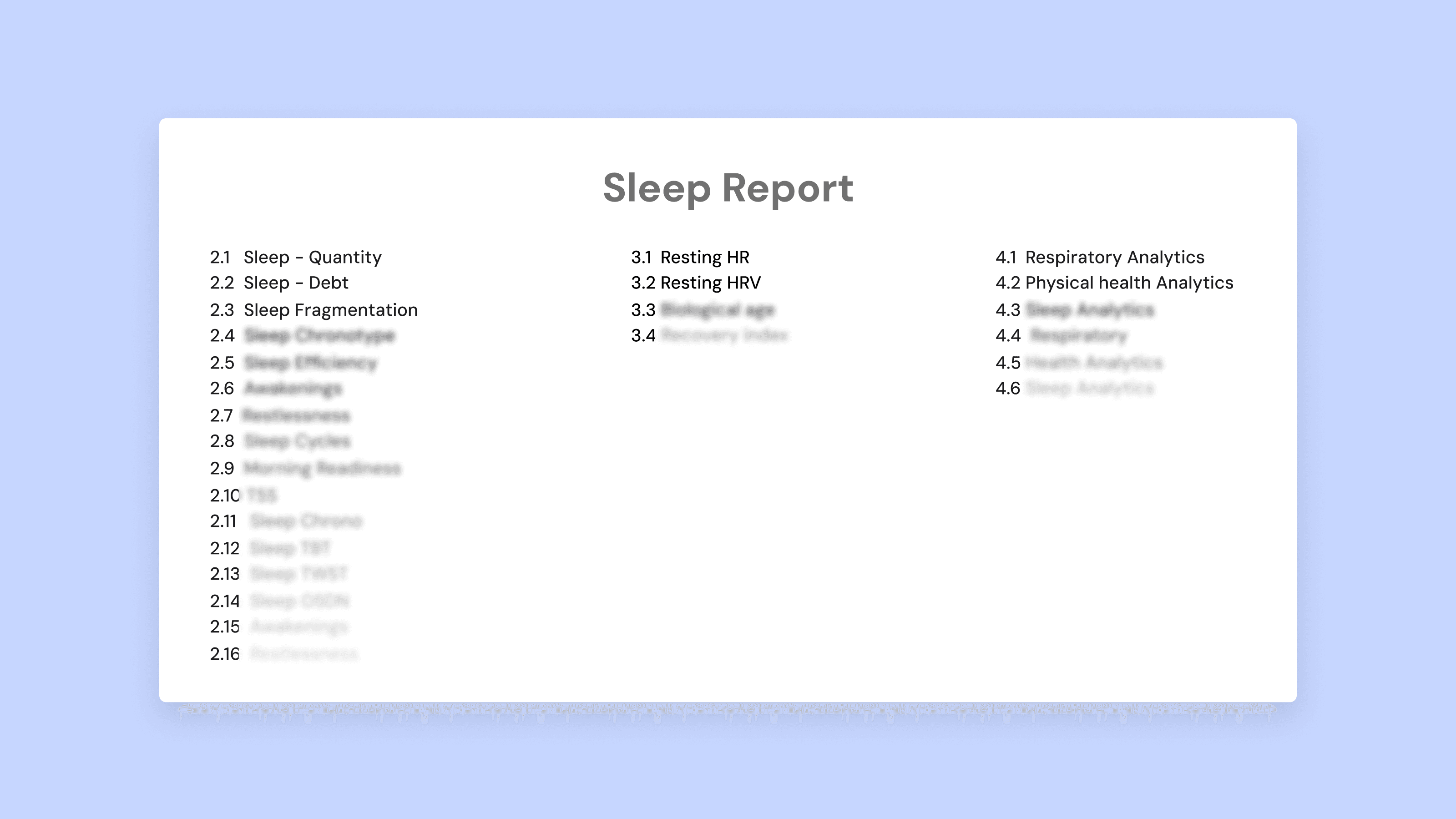
Defines the overall structure of the sleep report experience.
Redefined Architecture
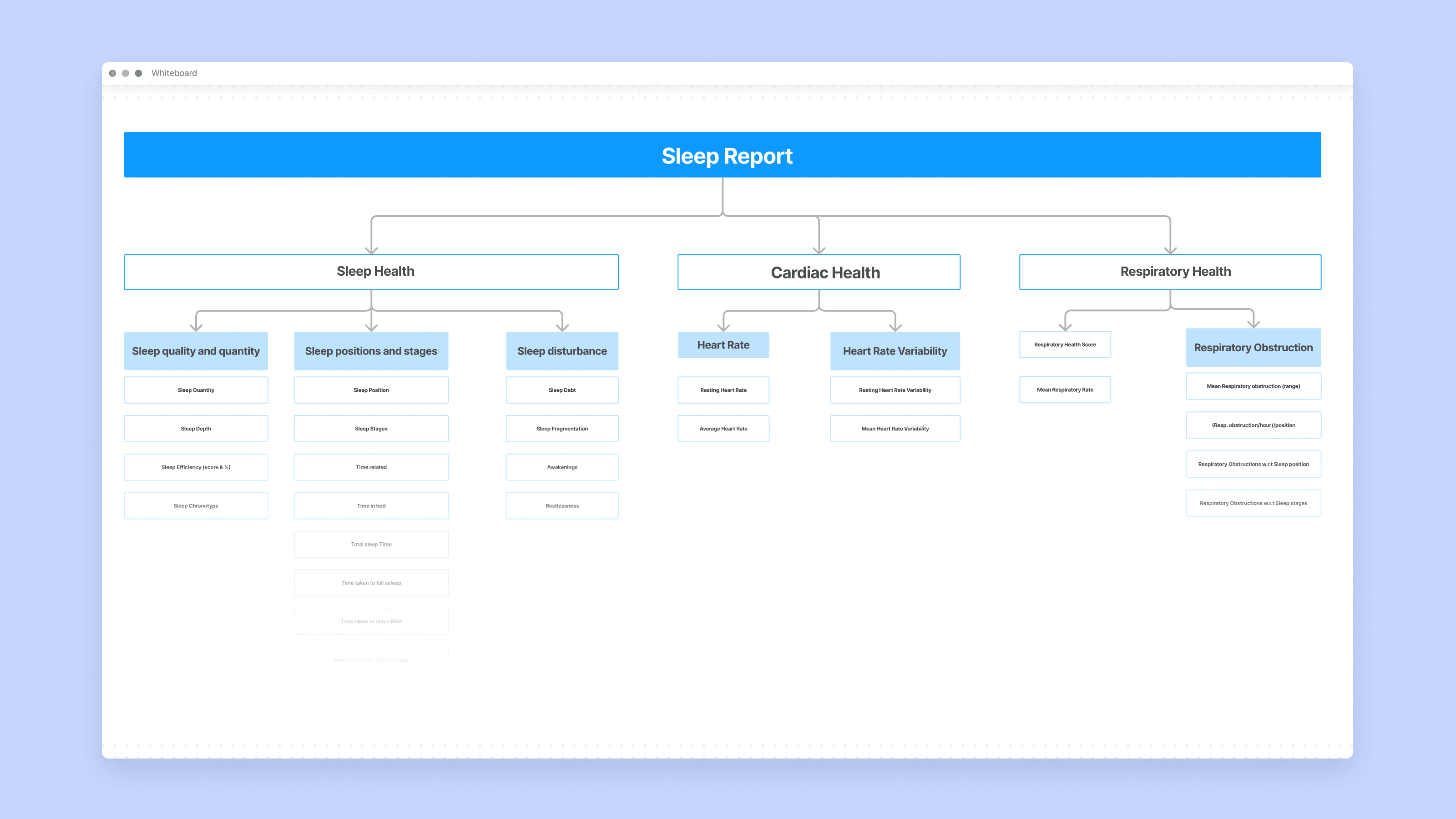
Each category contains subcategories with relevant biomarkers.
Visuals
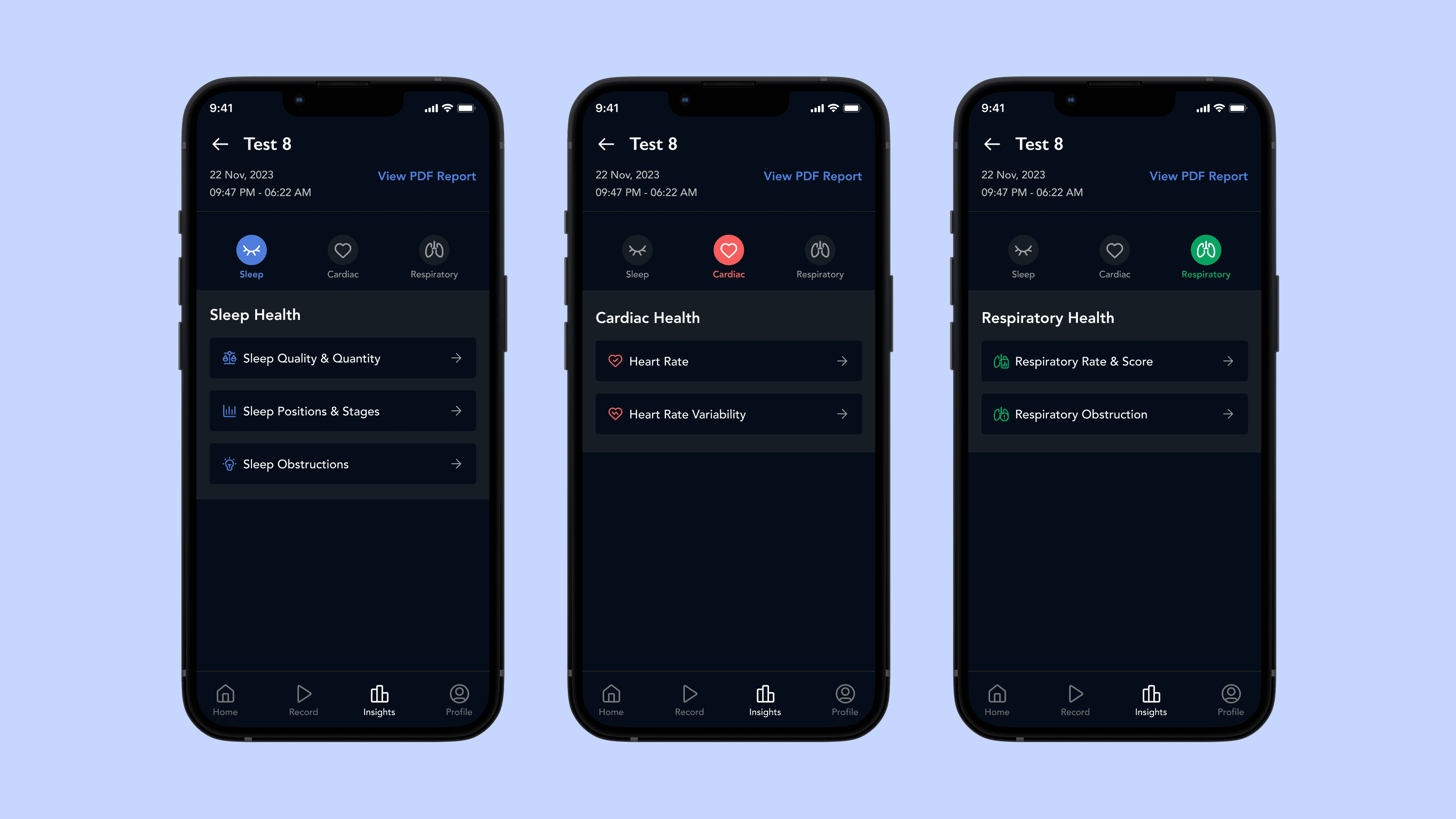
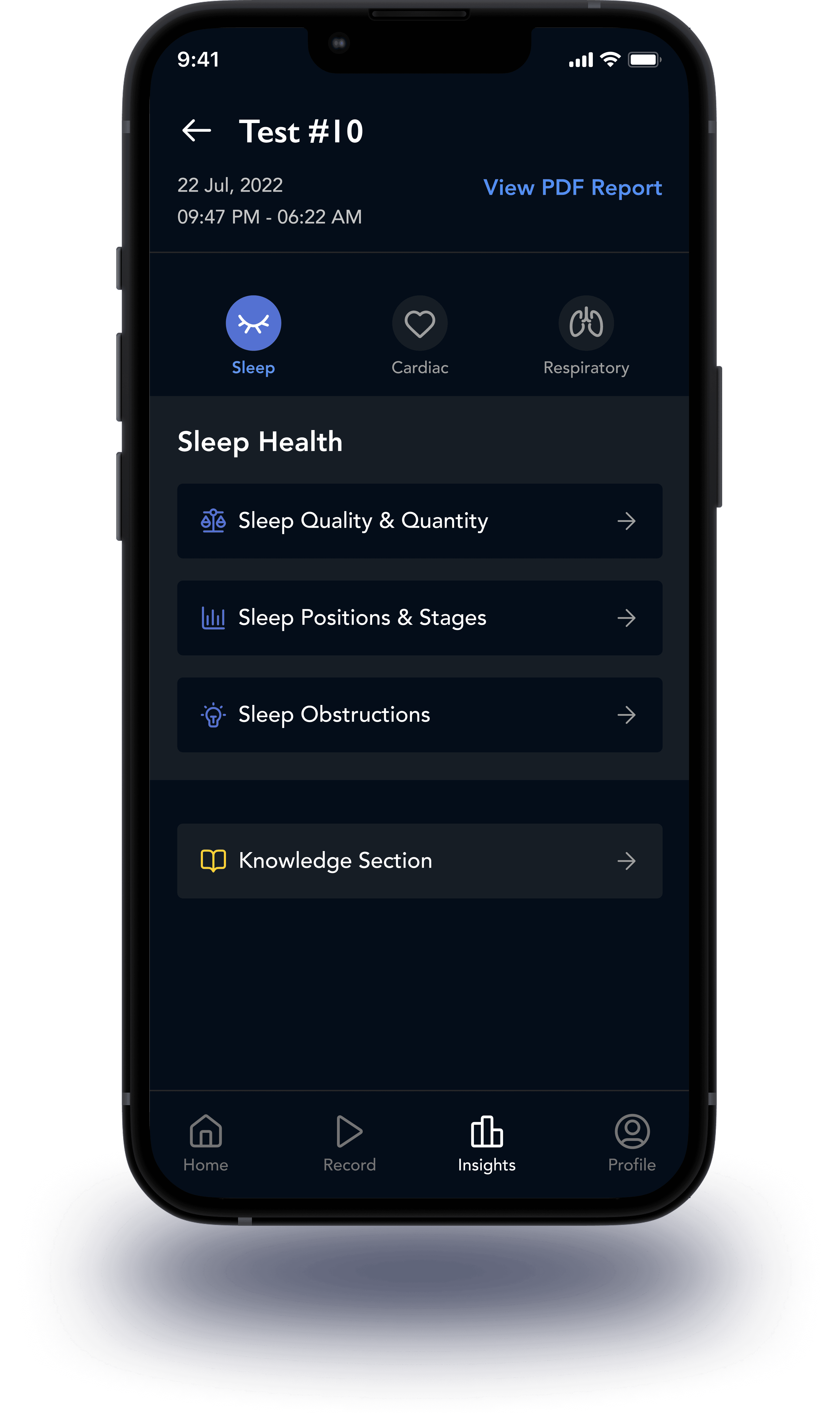
In the updated experience, the data is divided into three core areas: sleep, cardiac, and respiratory.
Visuals
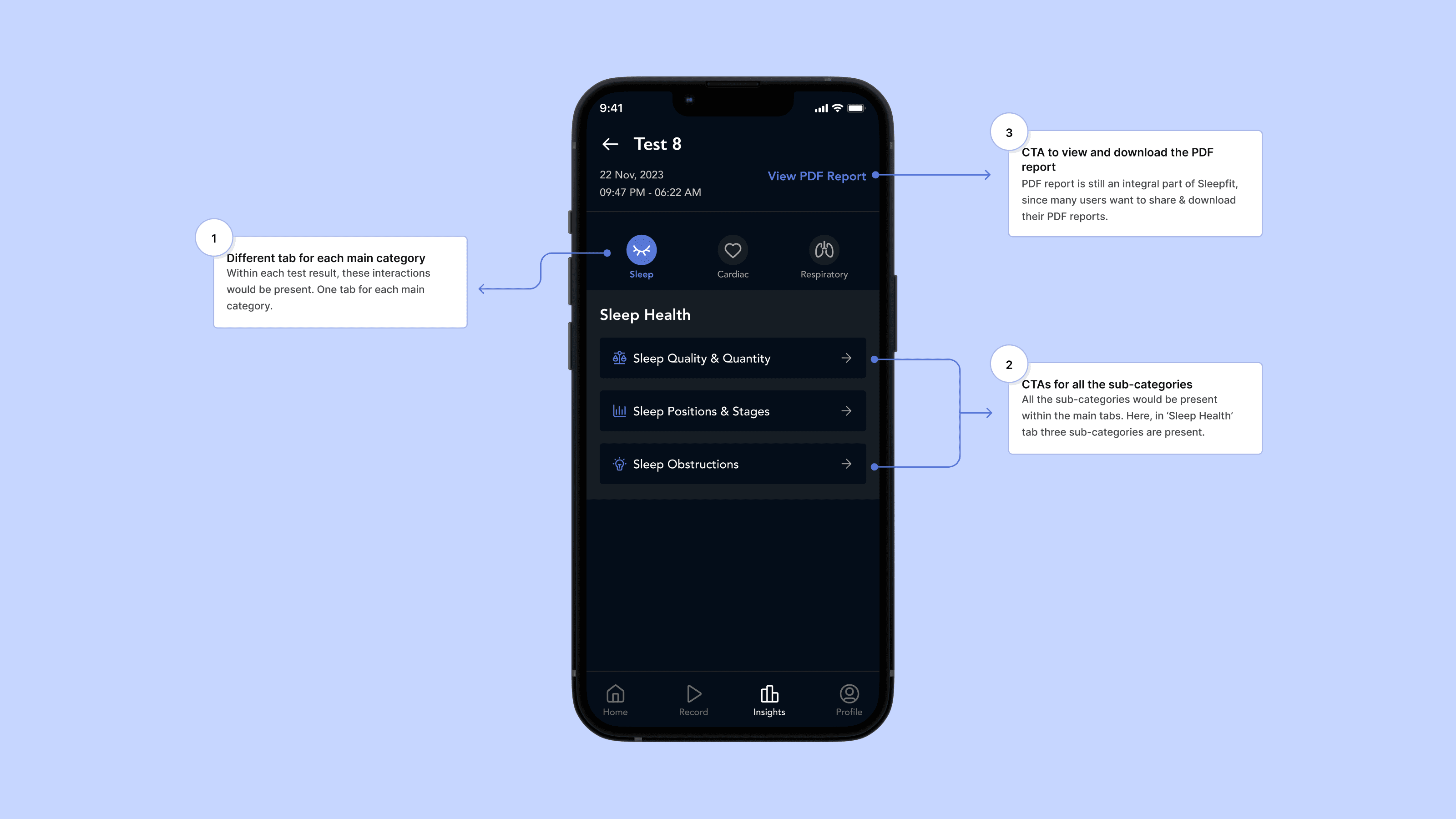
Outlines the anatomy of the main category experience.
Part 2: Representation
Ideation
The guiding principle was to cluster biomarkers with inherent relationships. For instance, we grouped together biomarkers associated with sleep stages and positions. Similarly, biomarkers with negative connotations, such as sleep awakenings and sleep fragmentation, were also clustered.
PDF Sleep Report Representation (Before)
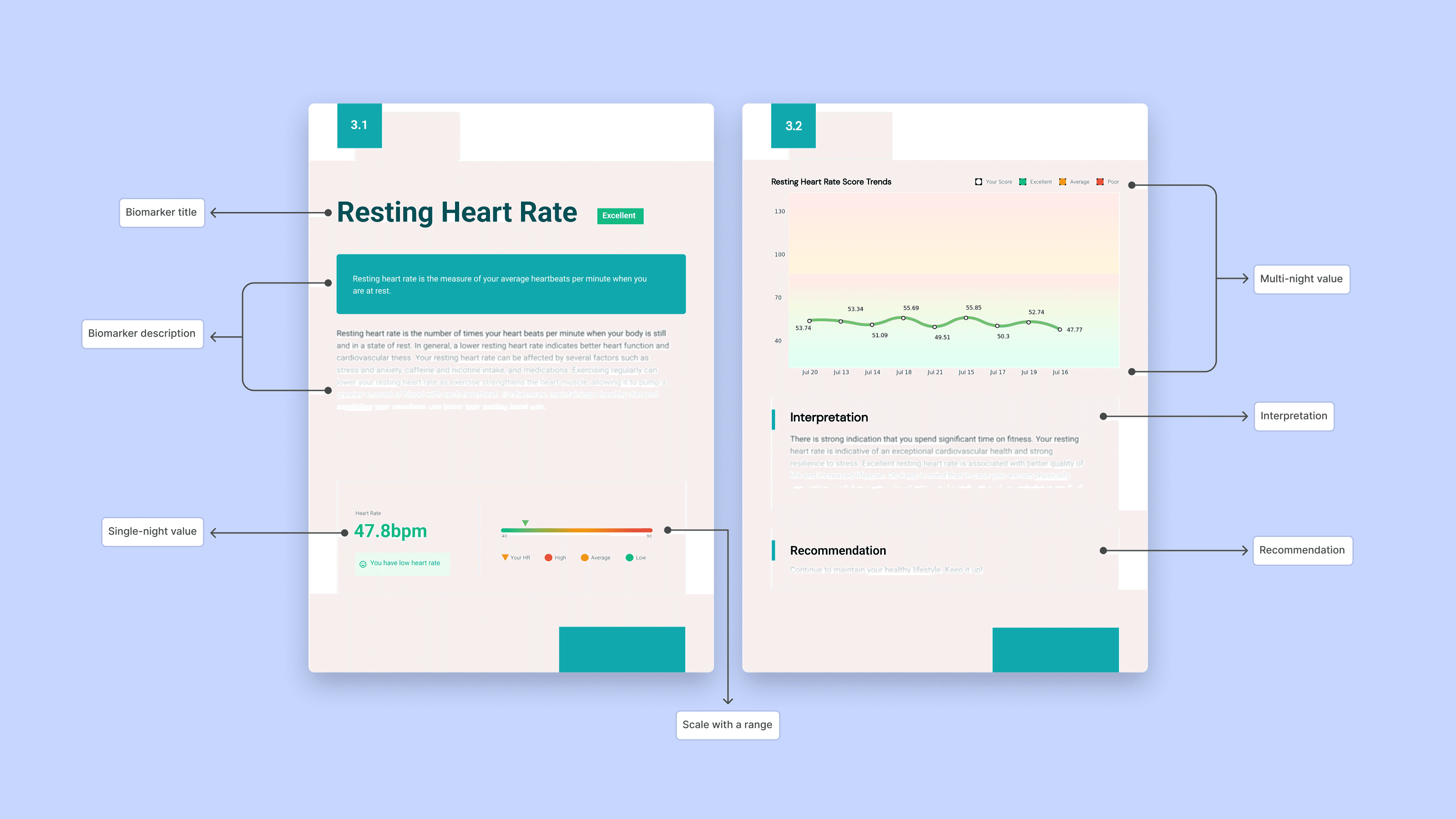
Technical health reports include multiple measurement methods and visualisations.
Visuals
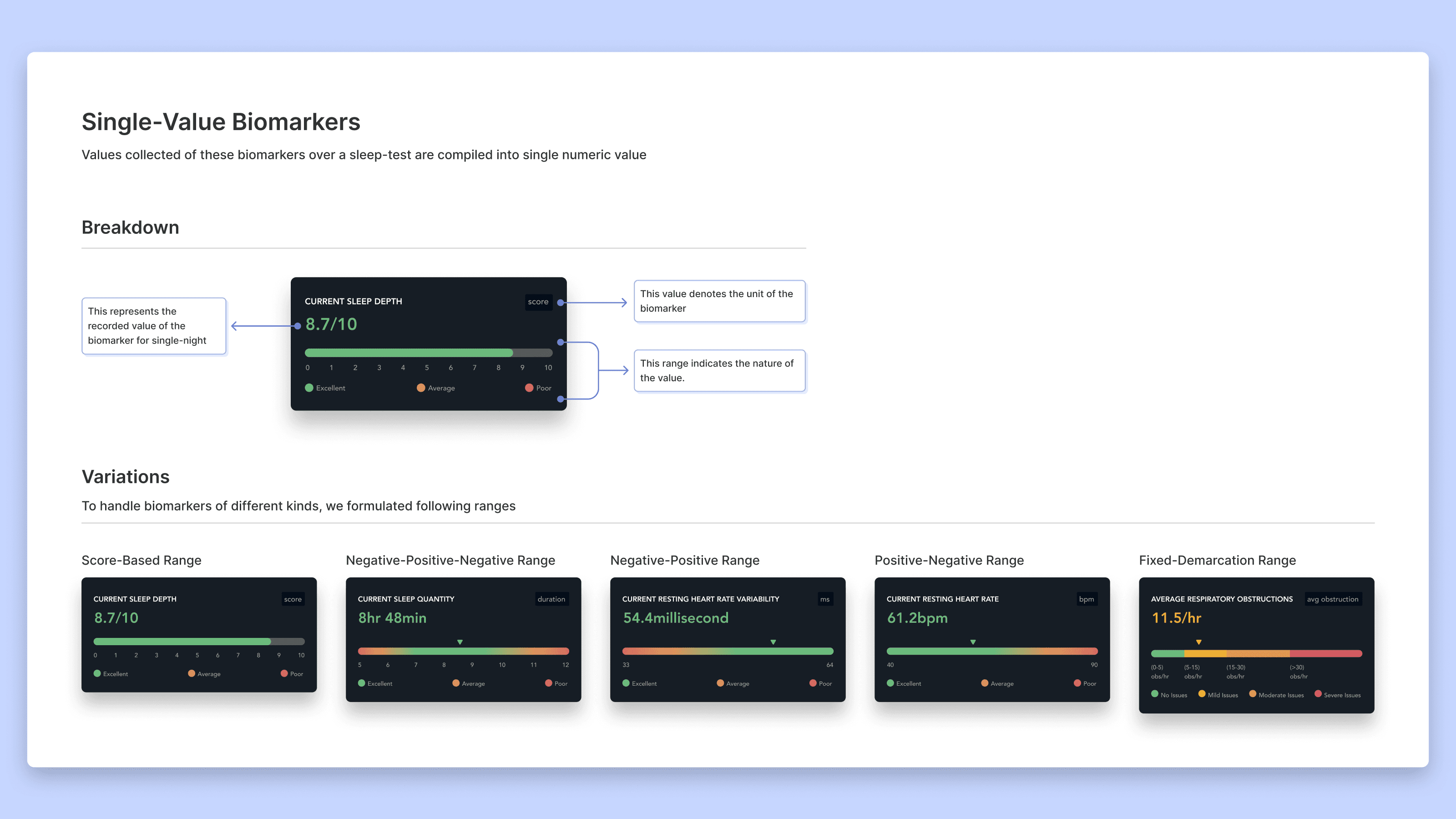
Biomarkers are visualised using clear, distinct patterns for better understanding.
Visuals
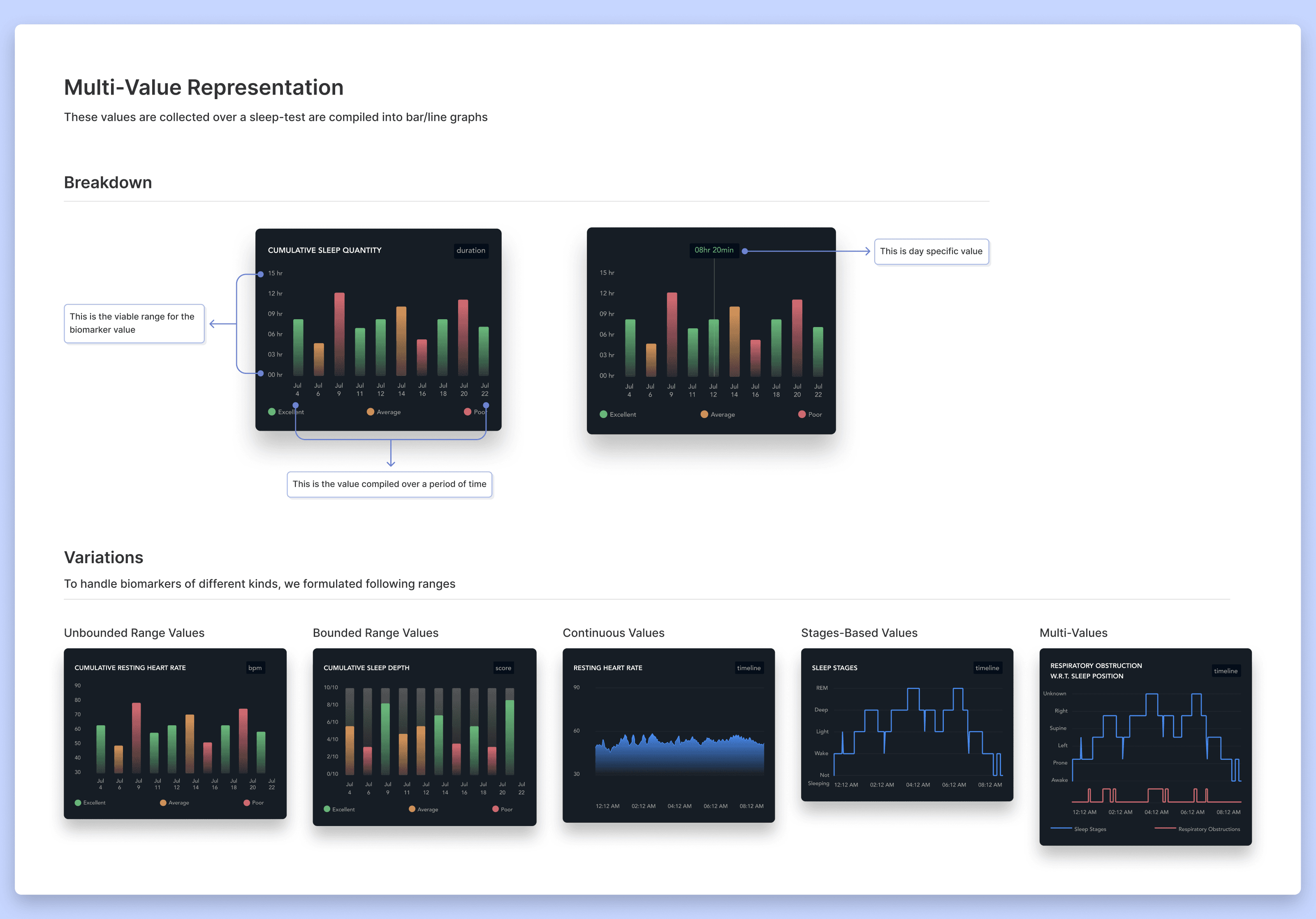
Consistent visualisation patterns are applied across different biomarker types.
Visuals
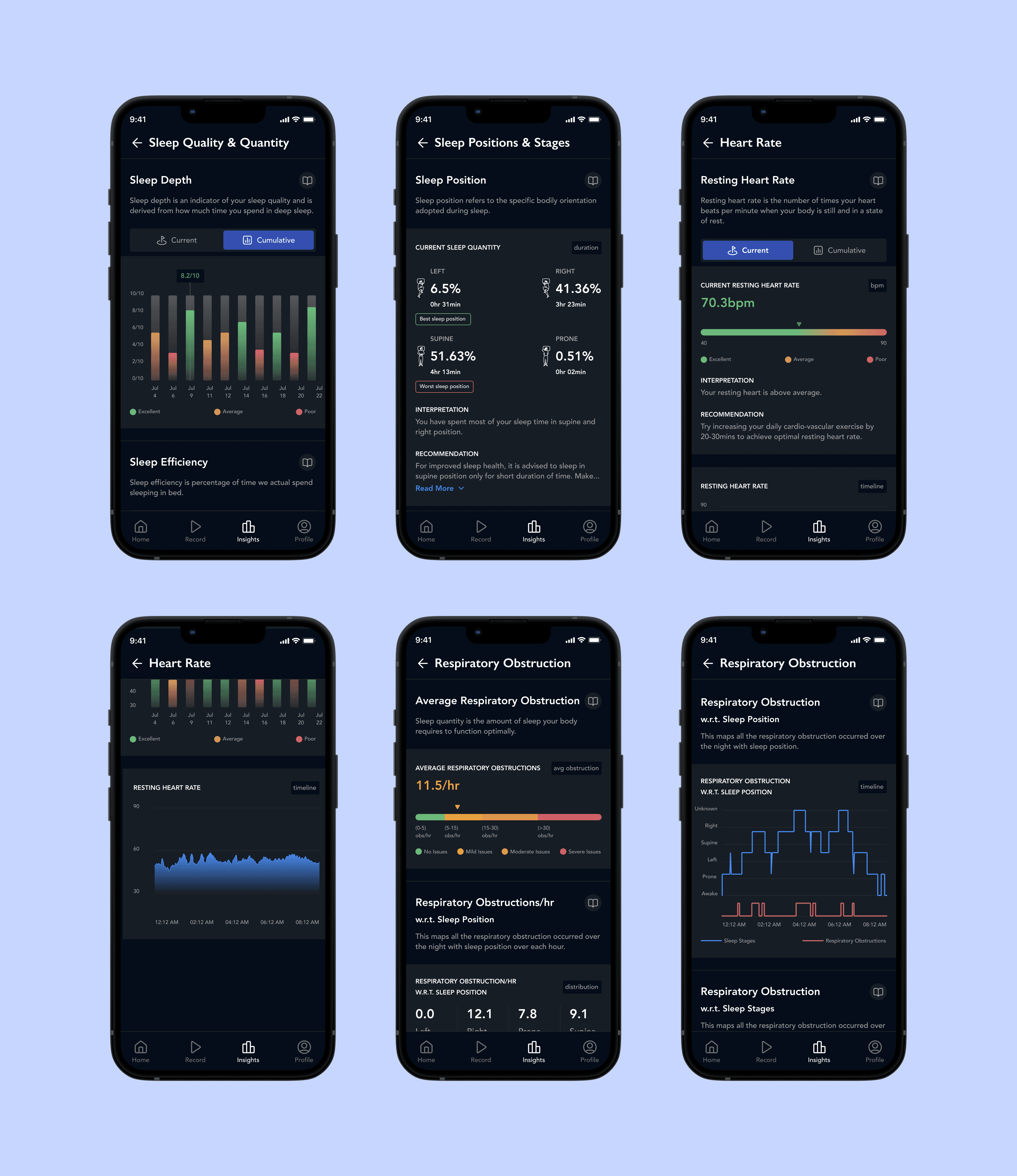
The complete biomarkers experience brings all data into a cohesive, unified view.
Supplementary Information
This product is extensive, and I can only provide limited information here. For a more in-depth discussion, please feel free to get in touch.
Neurobit / Oct - Jan 2024
Redefining sleep tracking experience
Introduction
What is Sleepfit
Sleepfit is an application designed to assist users in evaluating their sleep patterns through a comprehensive sleep test. Users can leverage the features of Sleepfit to gain a deeper understanding of their overall well-being and optimal sleep management.
What is a sleep test
A sleep test involves the systematic recording of various physiological biomarkers throughout a night using Sleepfit's device. Subsequently, the readings of these biomarkers are compiled into a comprehensive sleep report, which is subsequently shared with the users.
What is a biomarker?
A biomarker is a biological and physiological indicator of the body. Each biomarker measures and denotes different bodily functions. A few examples of biomarkers would be heart rate variability, REM sleep time, and respiratory obstructions.
How does Sleepfit work?
A user will wear the Sleepfit device, and connect it to Sleepfit app. Once the connection is successful, the user will start the sleep test and fall asleep. Upon waking up the user will end the test and remove the device. Within 3-5 minutes the user will get the sleep report on the app.
Product objective
In the initial iteration of Sleepfit, users received their sleep reports in PDF format. With the user base growing, our aim for the subsequent version of Sleepfit was to implement an in-app sleep report feature.
Challenges
Organisation
The PDF report is structured as a sequential compilation of biomarkers, encompassing 16 sleep biomarkers, 4 cardiac biomarkers, and 6 respiratory biomarkers.
Each biomarker is allocated approximately 1-2 pages, resulting in a total length of 37-40 pages for the PDF document.
The challenge here is to arrange these biomarkers in a simple and comprehensive UI. The challenge lies in structuring these biomarkers to ensure seamless and convenient access. This would require a systematic classification that not only accommodates the diversity of biomarkers but also ensures an intuitive and efficient user experience when accessing and navigating through them.
Representation
Each biomarker has the following set of information:
Biomarker name
Biomarker definition (7-8 lines)
Single-night test value
Multi-night test value
Interpretation
Recommendation
With 27 distinct biomarkers, each possessing the attributes mentioned above, the representation of recorded values varies depending on the nature of the biomarker.
The challenge at hand is to conceptualise a solution capable of effectively handling the diverse range of values associated with each biomarker type. Another challenge is to translate static PDF reports into an interactive app flow.
Research
I conducted internal research in collaboration with the backend team to gain a comprehensive understanding of the JSON files associated with each sleep report. The goal of the research was to understand the constituents of the JSON files inside-out.
Part 1: Organisation
Ideation
The guiding principle was to cluster biomarkers with inherent relationships. For instance, we grouped together biomarkers associated with sleep stages and positions. Similarly, biomarkers with negative connotations, such as sleep awakenings and sleep fragmentation, were also clustered.
PDF Sleep Report Architecture (Before)
Defines the overall structure of the sleep report experience.
Redefined Architecture
Each category contains subcategories with relevant biomarkers.
Visuals
In the updated experience, the data is divided into three core areas: sleep, cardiac, and respiratory.
Visuals
Outlines the anatomy of the main category experience.
Part 2: Representation
Ideation
The guiding principle was to cluster biomarkers with inherent relationships. For instance, we grouped together biomarkers associated with sleep stages and positions. Similarly, biomarkers with negative connotations, such as sleep awakenings and sleep fragmentation, were also clustered.
PDF Sleep Report Representation (Before)
Technical health reports include multiple measurement methods and visualisations.
Visuals
Biomarkers are visualised using clear, distinct patterns for better understanding.
Visuals
Consistent visualisation patterns are applied across different biomarker types.
Visuals
The complete biomarkers experience brings all data into a cohesive, unified view.
Supplementary Information
This product is extensive, and I can only provide limited information here. For a more in-depth discussion, please feel free to get in touch.